
PCB assembly used to sit quietly in the background as a technical task. Today, it has direct influence on margins, lead times, and even how quickly a company can respond to new market opportunities. As more products pack sophisticated electronics inside, every decision around assembly capacity, supplier strategy, and quality control has measurable financial consequences.
For many manufacturers, the debate comes down to one question: should they invest in their own SMT lines and manufacturing talent, or rely on external EMS partners for speed and scale? The discussion is no longer only about operational style. It sits right next to conversations on capital allocation, risk, and long-term competitiveness. For companies that work with partners like Beyonics Precision Engineering, the topic of PCB Assembling In-house vs. Outsourcing becomes part of a broader strategy on how to align engineering ambition with commercial outcomes.
PCB Assembly as a Strategic Lever, Not Just a Production Step
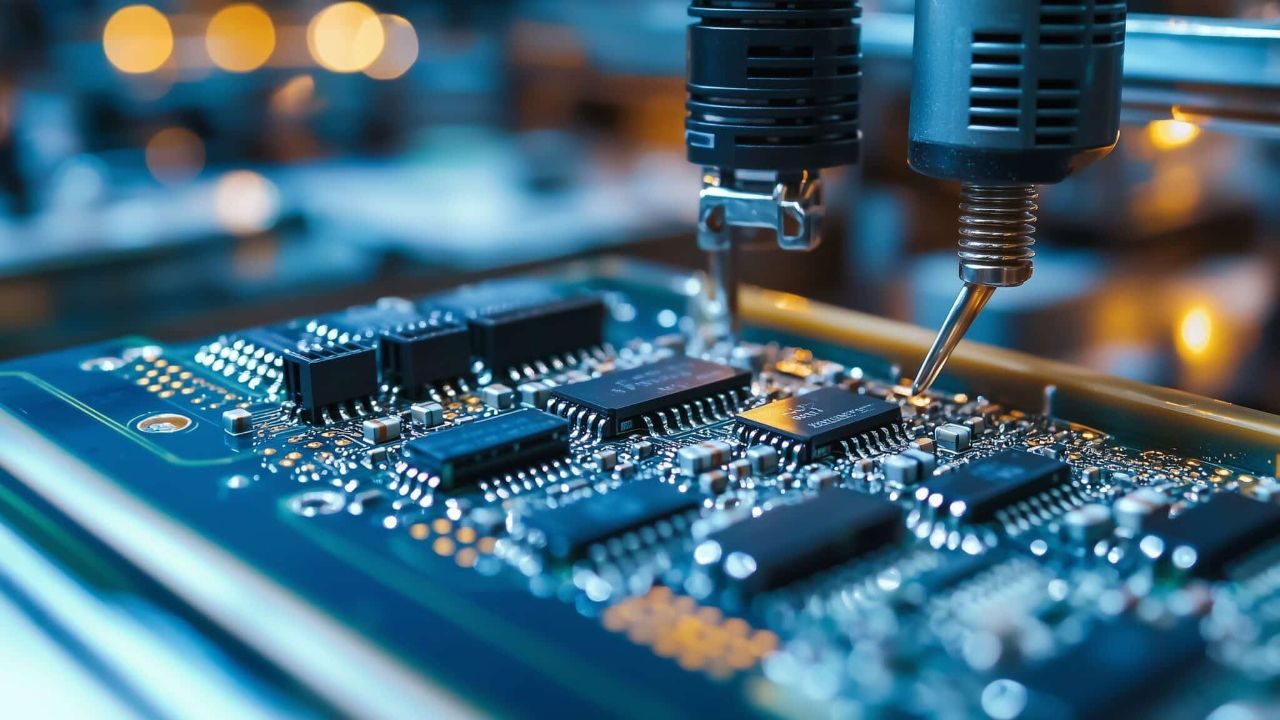
The first step to making a sound decision is to treat PCB assembly as a strategic lever rather than a technical detail. Every choice around where and how boards are assembled affects multiple business dimensions at once.
The assembly model shapes your cost structure. Owning equipment means higher fixed costs and lower marginal costs per unit at scale. Outsourcing shifts a large part of the cost into variable form. This choice directly affects gross margin sensitivity to volume swings. A company with volatile demand usually benefits from a lighter asset base. A company with high, stable volume can extract more value from its own lines.
Assembly strategy also influences agility. In-house teams can pivot setups, swap components, or implement engineering changes faster, as long as they have the right skills and capacity. Outsourcing introduces an extra layer of coordination, documentation, and queueing in the contract manufacturer’s schedule. That can delay change, but it can also shield the business from disruption if the EMS partner runs multiple lines across several sites.
Thinking about PCB assembly as a strategic lever encourages cross-functional input. Finance, operations, design, and commercial teams all need to contribute data. Engineering cares about design for manufacturability. Operations cares about uptime and throughput. Finance cares about cash tied up in equipment or inventory. Sales cares about lead times and customization options promised to customers. A sound assembly decision balances these angles instead of satisfying one department at the expense of others.
Cost, Margin, and Total Cost of Ownership
When companies compare in-house assembly and outsourcing, they often focus on quoted unit prices. That usually leads to poor decisions. The real difference lies in the total cost of ownership over several years and across a range of demand scenarios.
In-house assembly requires upfront capital for SMT lines, reflow ovens, AOI, test fixtures, ESD infrastructure, and supporting utilities. It also demands ongoing investment in skilled technicians, process engineers, maintenance, and spare parts. These fixed costs turn into attractive unit economics only when lines run at healthy utilization. A plant that runs at half capacity can quietly drain margins.
Outsourced assembly converts many of those fixed costs into a price per board that folds in equipment, labor, overhead, and margin for the EMS provider. That price may look higher than your raw BOM plus internal labor rate. The advantage appears in flexibility. The company avoids tying capital to equipment and can align spending with actual shipments. This improves cash flow and reduces the risk of owning outdated equipment when technology shifts.
Hidden costs exist in both models. In-house assembly can suffer from low yields, long debugging cycles, and rework that inflates the true cost per good board. Outsourcing can introduce costs in the form of extended lead times, larger safety stock, and additional logistics steps. A realistic business case model needs to capture yield impact, scrap rates, freight, inventory holding cost, and the cost of engineering time spent coordinating with a supplier. Only then does the margin picture become clear.
Quality Control, IP Protection, and Regulatory Risk

Quality performance in PCB assembly has a direct line to warranty cost, brand reputation, and customer satisfaction. The chosen model shapes how tightly a company can control process parameters, component traceability, and corrective actions.
In-house assembly offers full visibility over every step of the process. Engineers can tune solder profiles, inspect boards in real time, and immediately trace failures back to specific machines or component reels. Corrective actions happen faster, and process knowledge accumulates inside the organization. For companies in safety-critical sectors like automotive or medical devices, this visibility can support compliance audits and customer trust.
Outsourcing quality to an EMS partner does not mean sacrificing standards, but it does require rigorous vendor qualification and ongoing governance. Supplier audits, clear quality agreements, and shared metrics become essential. Leading EMS providers often have deeper process expertise and more advanced inspection systems than smaller in-house teams. When the partnership is managed well, overall field quality can be very strong. The business risk lies in insufficient oversight or poor communication of requirements.
Intellectual property protection and regulatory exposure also influence the choice. Complex boards can embed proprietary architectures, security features, and novel layouts. Some companies prefer to keep these inside their own walls, especially when operating in highly competitive markets or sensitive sectors. Others mitigate this concern through strict NDAs, carefully defined data packages, and allocation of the most sensitive work to trusted partners in jurisdictions with strong IP protection laws. The right approach depends on the nature of the product and the company’s appetite for shared risk.
Speed, Innovation, and Engineering Collaboration
Time to market and the pace of iteration are core business drivers in technology-heavy industries. PCB assembly strategy shapes the practical speed of product development far more than many teams expect.
In-house assembly can turn engineering teams and manufacturing into a close collaboration. Prototypes can move from layout to assembled boards in days instead of weeks. Engineers can sit with process specialists, review issues on the line, and immediately test adjustments. This tight feedback loop supports rapid design-for-manufacturability improvements. It also helps uncover subtle layout or component issues early, when fixes are still cheap.
Outsourced assembly can slow early-stage iterations if every prototype run needs to fit into an EMS provider’s schedule. Lead times for low-volume, high-mix work often stretch as contract manufacturers prioritize large production orders. That delay can extend product launch timelines and reduce the number of design cycles a team can afford before release. Some companies solve this by maintaining a small in-house prototyping line while outsourcing volume production.
Innovation is not limited to new features. It includes the ability to create product variants, handle customer-specific configurations, and respond quickly to design changes triggered by supply chain disruptions or new regulatory requirements. A hybrid approach often delivers the best of both worlds. Early prototypes and sensitive designs stay in-house. Mature, stable products shift to outsourcing at scale. The key is to build clear criteria for when a design moves from one model to the other and to maintain compatible processes and documentation for both paths.
Supply Chain Resilience and Global Risk
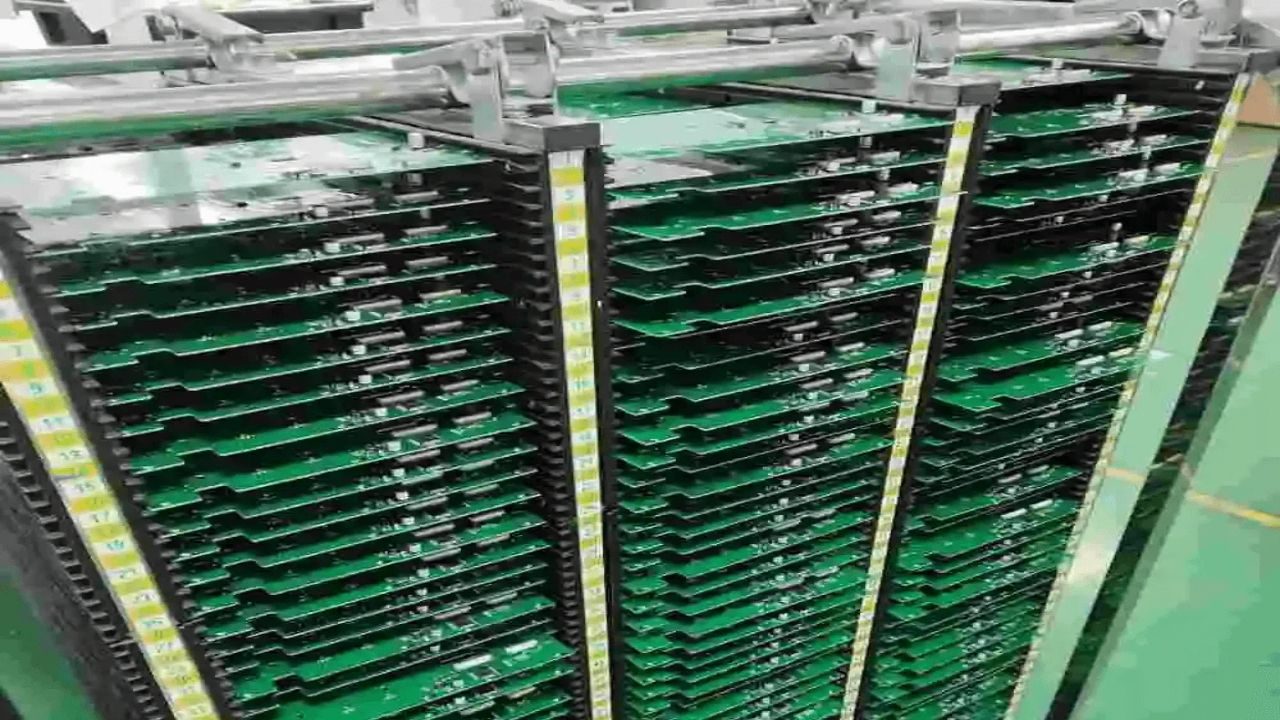
Global disruptions over the past years have shown how fragile electronics supply chains can be. Factory shutdowns, border restrictions, transport bottlenecks, and sudden component shortages reshaped lead times overnight. PCB assembly strategy plays a central role in how resilient a company can be in such conditions.
In-house assembly gives direct control over scheduling and priorities. When critical orders appear, internal operations can rearrange plans and allocate capacity without external negotiation. It also allows more direct relationships with component suppliers, which can be valuable in allocation scenarios. On the other hand, a single in-house plant creates a geographic concentration of risk. Natural disasters, power outages, or local disruptions can bring the assembly to a halt.
Outsourcing to a global EMS network spreads risk across locations. Many contract manufacturers operate several plants in different countries and can redistribute work if one site faces disruption. They also maintain strong relationships with component distributors and may have better access to constrained parts. The trade-off is reduced direct control. You rely on the partner’s ability to manage its own internal priorities and supply chain strategy.
A balanced approach to resilience often involves multi-sourcing. Companies keep some in-house capacity for critical products or key customers and also qualify at least one external EMS partner. This structure allows volume flex and provides options if one path experiences disruption. To make this work, engineering teams need to design boards and processes that can run successfully in both environments. That means harmonized documentation, clear test specifications, and component choices that avoid overly niche footprints or suppliers.
Building a Decision Framework That Outlasts Individual Projects
Many companies treat the in-house versus outsourcing decision as a one-time conversation tied to a specific product. That leads to inconsistent choices and internal friction. A stronger approach is to create a repeatable decision framework that applies across product families and life-cycle stages.
The framework should combine a quantitative model and qualitative criteria. On the quantitative side, finance and operations can define threshold values for annual volume, forecast certainty, product complexity, and required margin. Above certain volumes and stability, investment in in-house assembly may be justified. Below those thresholds, outsourcing keeps the business more flexible. Scenario modeling helps illustrate how the decision performs under optimistic and conservative demand curves.
Qualitative criteria refine this baseline. These include IP sensitivity, regulatory requirements, the strategic importance of short lead times, and the need for close engineering collaboration. For example, an innovative flagship product in a strategic market might remain in-house during its early life for tight control and rapid refinement, even at moderate volumes. A cost-sensitive commodity product might move to outsourcing early to benefit from the EMS partner’s economies of scale.
Once the framework is agreed upon, leadership can communicate it clearly across the company. Engineering teams know what kind of designs are likely to run where. Sales and product management teams can align their promises to customers with real operational capabilities. Finance teams can forecast CapEx and OpEx more accurately. This clarity reduces internal debate on every new project and keeps the PCB assembly choice anchored to business goals rather than local preferences.
Practical Steps to Optimize Your PCB Assembly Strategy
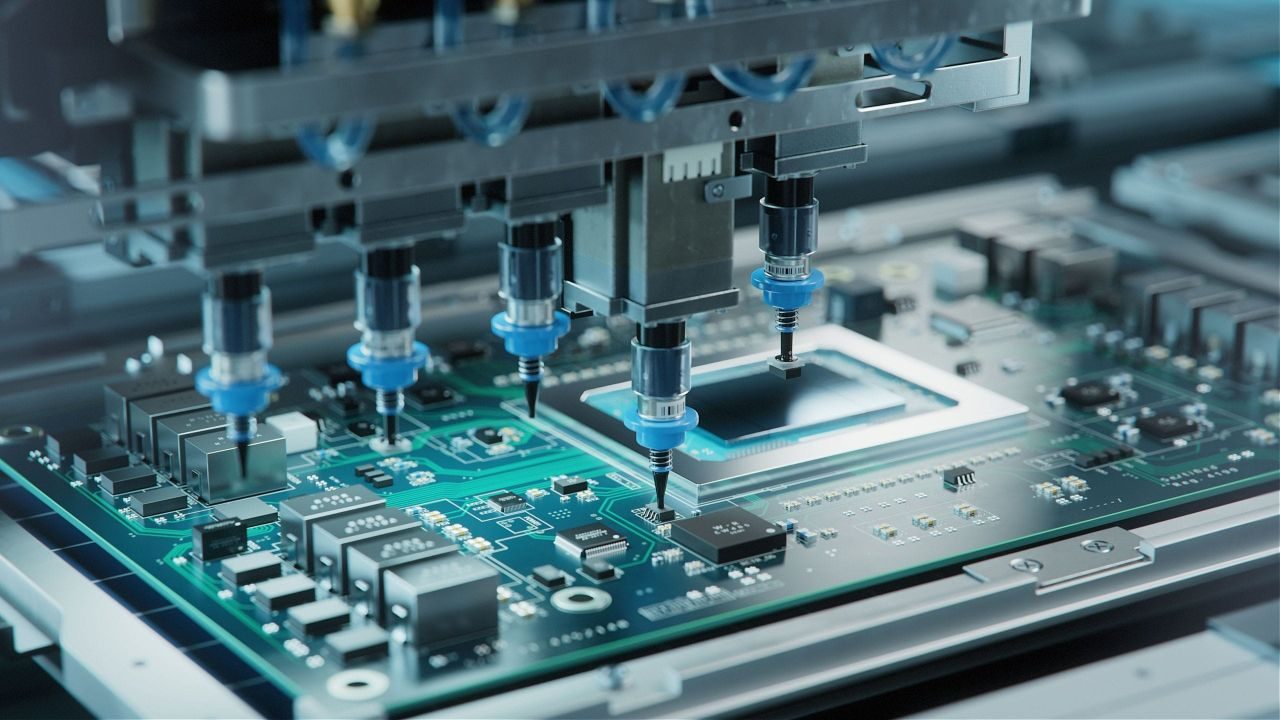
Turning strategy into results requires concrete action. Companies that gain real advantage from their PCB assembly choices tend to follow a set of practical steps.
First, they create a clear, shared view of current capability. That means mapping in-house equipment, skills, yields, and throughput, as well as evaluating existing EMS partners with data instead of anecdotes. On the internal side, process capability studies, yield analyses, and downtime records reveal where investment would have the highest impact. On the external side, structured QBRs, scorecards, and performance dashboards give a realistic picture of partner reliability.
Second, they pilot hybrid models instead of jumping to an extreme. A company might keep prototypes and low-volume, high-mix products in-house while outsourcing a selected set of stable, high-volume boards. Over time, the portfolio can shift as products mature and new designs enter the pipeline. These pilots provide real data on cost, quality, lead time, and collaboration effort under each model. Leadership can then calibrate strategy based on evidence instead of assumptions.
Third, they invest in strong interfaces between engineering and manufacturing, regardless of who owns the line. For in-house operations, that means regular design for manufacturing reviews, shared process metrics, and joint problem-solving sessions. For outsourced work, it means clean design packages, well-defined test and acceptance criteria, and frequent technical communication. Teams that treat their EMS partners as extensions of their own engineering group gain better outcomes than those that manage the relationship purely through purchasing.
In the end, the question is not which model is universally better. It is the combination of in-house control and outsourcing efficiency that aligns with your products, markets, and risk profile. Companies that approach PCB assembly choice with this level of clarity and discipline turn a technical decision into a source of long-term competitive advantage.